Dominic Young

Writings and more

  • If social media challenged the traditional advertising revenue of media organisations, artificial intelligence threatens to annihilate it, writes Dominic Young.

    Government’s of the Industrial World, you weary giants of flesh and steel, I come from Cyberspace”, said cyber campaigner John Perry Barlow in his Declaration of the Independence of Cyberspace back in 1996. “On behalf of the future, I ask you of the past to leave us alone. You are not welcome among us. You have no sovereignty where we gather.”

    Barlow largely got his wish. Governments around the world acted to exempt internet platforms from laws which apply in the real world of flesh and steel he so despised.

    We’ve been living with the consequences ever since. The big platforms operate to largely self-written rules, and the web has gradually become a polluted swamp.

    The media is drowning in this swamp. With advertising revenue sucked away, and other revenue sources frustratingly elusive, we now have generative AI entering the fray and with it, fresh concerns for journalism.

    Generative AI is already capable of amazing things. But warnings are being sounded too. It feeds off the work of creative humans to produce plausible — if not truthful — content faster and more cheaply than any human could keep up with. It has no need to witness events, talk to people or check information. Laws like copyright, designed to prevent unauthorised copying and use of other peoples’ work, are routinely ignored on the internet and, so far, by AI systems too.

    The implications are profound for publishers, and democracy, which relies on trustworthy news sources to keep us informed. AI systems can easily present fictions as facts. But who can hold the machines to account? Who is accountable for the truth and legality of their output? Right now, it would seem, nobody.

    The media industry is one of many lobbying for better regulations. These rules should, among other things, defend copyright and outlaw using content to train AI systems without permission, as well as resisting the desire of the tech sector to avoid regulation and set its own rules for AI. As media academic Emily Bell put it, who would set foot on a plane if airlines ran the Federal Aviation Administration?

    Regulation may help eventually, but the publishers can’t wait for politicians to wrap their heads around the threat and should act preemptively to minimise the potential harm AI could bring to its revenues.

    This will require yet another rethinking of how people discover and consume their content. Can we make it easier to navigate between trusted sources, instead of handing people off, back-and-forth, to search and scroll through social platforms? If we can, we can take advantage of our enormous shared network and reduce our dependence on those platforms. Of course, this requires a certain level of working together; camaraderie with competitors is not always a strength of media organisations.

    Second, if we’re going to reduce our dependence on advertising, we need to make consumer revenues a reality for any publisher. The subscription model on its own is too limited to achieve this, locking all but the most engaged out on the other side of the paywall.

    We need a consumer payment model for the rest of us. This opens the prospect of a digital equivalent to a supermarket, where anyone can access and pay for whatever they want without encountering constant barriers.

    Perhaps most urgently in the AI era, publishers must do a much better job of telling us when what we’re reading can be trusted.

    What makes legitimate news publishers more trustworthy? For a start, they’re fully accountable for what they publish. They have names, and addresses; they’re corporations with offices. They have journalists who are named. They are accountable to their reputations, to their audiences and to their ethics. Legitimate publishers are fully accountable to their legal systems and courts as well as their readers.

    The media’s declaration of independence — from the platforms, from the unwinnable race for ad revenue, from the constant battle to stay afloat and, maybe even from the hope that politicians and regulators will ride to the rescue — can give it back control of its own commercial destiny.


    Originally published at https://www.cityam.com on June 29, 2023.

  • The INMA World Congress, a couple of weeks ago in New York, was really lovely. Great to be back in New York for the first time since before the pandemic, great to catch up with old friends, fascinating to hear the presentations and insights and, of course, an opportunity to meet people for the first time.

    In my conversations I kept hearing the same remarks: for sites big and small, subscription growth is plateauing, or even going into reverse. It’s something I wrote about for INMA in a few weeks before the congress, and I can see I struck a chord.

    Many of the publishers I spoke to sense that the pool of potential subscribers is shrinking. As one of them put it to me, they think they might have found all the needles in the subscription haystack.

    Subscribers are, of course, hugely valuable — especially when they’re paying full price. Less so when they’re paying promotional rates, which can be as low as 2% of the full price. Managing and mitigating churn has now become an expensive and losing battle for many.

    It might sound strange, but that is good news. For many publishers, only around 1–2% of digital readers will become subscribers. The task of finding them is complete; now it’s time to turn attention to the other 98%.

    The 98% are the customers Axate was created to serve and deliver for publishers. They offer a rich opportunity — starting with former subscribers who would love not to be locked out of a title they liked enough to subscribe for a while. But there are plenty more beyond that; countless readers who would happily, spontaneously and occasionally pay but won’t make the leap to monthly payments.

    Acquiring and retaining these users can be done at a fraction of the cost of finding the ever-elusive next subscriber. They can be more valuable as well: every time they come back, they spend a little more. If you give them more reasons to come back, and more opportunities to spend money, there’s no upper limit to how much they might be worth.

    We have a diverse, vibrant, competitive media sector; most readers want the option to read whatever they want, whenever they want to. Denying them that chance, in pursuit of high-value and committed subscribers, may have made sense while that market was growing. We were saving the next opportunity up. Now is the time to unlock the 98%.


    Originally published at https://www.axate.com on June 7, 2023.

  • This article was originally published in as part of their series on Better Britain. Reaction uses Axate to charge for some of its articles (this one is free on their site as well as here!)

    Britain is indisputably great when it comes to creativity. We are over-performers in the fields of music, writing, film production, games and more.

    In an ideal world, the internet would, and should, be the medium the British creative industries could have used to go from being great to globally dominant. Media is one of the few sectors and products which the internet can actually deliver perfectly and seamlessly without the need for a van dropping off packages.

    But the internet has not delivered. In fact, it has been a massive disappointment, undermining the creative industries as it has grown and expanded. Our task now is to turn that disappointment into a fresh opportunity. The prize will be creative industries that add even more to UK growth and productivity.

    The internet has not delivered. In fact, it has been a massive disappointment

    How?

    First, we need to rebuild two simple things. Permission and payment.

    The internet operates without permissions, and that is pernicious. We have got used to the idea that our data, our content, our privacy are all mostly controlled by someone else. For a long time we had a vague sense that we might not be totally comfortable with that situation, but we accepted it as a necessary, perhaps even inevitable, by-product of the internet itself.

    That might have been true in the early days. Perhaps giving permission and controlling our own data was a technical impossibility. How could any internet machine understand our permission or refusal?

    The internet operates without permissions, and that is pernicious.

    We were fooled. The capability to build-in privacy, data protection, and copyright were always feasible, the more so every time Moore’s law (which observes a doubling in computing power every year) delivers another leap in capability. They were simply not considered, because the nascent internet giants had no incentive to do so.

    The permission-free internet is fundamental to what companies like Google and Facebook do. If they had to have proper permission or obey your conditions before copying and storing your words and pictures, or before gathering data about you, their business models would collapse.

    So they operate in a self-created and self-regulated environment where such permission is simply not needed or obtained via a mandatory “click-wrap” set of legalese unread and ignored by all their users.

    More recently, the idea of restoring rights to users, the right to give, or withhold (or put conditions) on permission was rejected by lobbyists as a development which would “break the internet”. But lawmakers are now restoring them anyway, through initiatives like GDPR and updated copyright law. And guess what? The internet is still working.

    Give every single internet user back their human rights — control over their images, their work, and their private data.

    Restoring these pre-internet laws and making them apply to the digital world as they have always done to the physical realm gives every single internet user back their human rights — control over their images, their work, and their private data.

    But payment is just as important for the future as permission.

    Imagine if less of the internet was free. Imagine paying for things that USED to be free online, even the media you consume. It might not seem the most attractive idea for you as a consumer, but think a little deeper. You probably pay for some stuff already — Spotify? Netflix? Perhaps even a newspaper?

    The value proposition is pretty clear. You get a lot in return for your money. If you didn’t you would simply stop paying, or buy something else instead.

    Being the customer, paying for things, makes you immensely powerful.

    Being the customer, paying for things, however small each payment might be, makes you immensely powerful. Everyone wants your money, so they really try hard to earn it. You can give, you can take away. If the price is too high, you won’t pay. If the quality is too low, you won’t pay either.

    Can you see the emerging quid pro quo?

    The return of functioning permission and payment to the internet empowers you as an individual. You can decide who gets your photos, your information, and your creative output and on what terms. You can decide to be private. You can also decide who gets your money — and who doesn’t. The price of breaching your trust is the loss of your custom. The world of permission and payment puts you in control — and reduces the dominance of the big platforms over the whole internet.

    The price of breaching your trust is the loss of your custom.

    Creating these capabilities also empowers and rewards creators and the media companies which surround them. Anyone with a great media product can take advantage of the internet’s ability to reach audiences.

    In this brave new world, creativity and great ideas, not ownership of internet pipes and platforms, become the principal driver success in all kinds of media. And paradoxically this is also good news for the big platforms which will now need to adapt to all this change. All these creators seeking audiences to drive their profits are going to invest some of their money — and content — in marketing. That is where Google and Facebook really make their money.

    A way to define a new era for the internet which corrects many of the dysfunctions which define it today

    For me, having worked in the news industry during the whole web era, this vision is compelling and exciting. It’s not just a way to stop the rot that is destroying the news business and peoples’ trust in it, but a way to define a new era for the internet which corrects many of the dysfunctions which define it today. Without having to go to war with Silicon Valley, we can create a more functional internet which is focused on, and rewarded by, its users.

    The greatest sin I have seen committed by the news industry in the web era is inaction. Too often they have clearly understood and articulated problems or threats from the internet, but failed to act decisively to build and back the solution to that problem. Instead they have waited for someone else to act — usually either big platforms or governments. But this has not delivered them from the parlous state they now find themselves in.

    Which is why, having understood the opportunity to seize the moment and change things, I have created a company to make a bit part of it possible. We solve the payment problem for any publisher in the simplest possible way, by making it easy for them to charge whatever price is right, and by making the price of reading an article just the cost of that article, not an ongoing subscription. Our solution is portable between publishers and works on any participating site.

    The publisher still has to produce a product that readers love

    For readers and publishers alike, it takes away all the barriers to paying for the media. Well, nearly all. The publisher still has to produce a product that readers love, and feel happy to pay for. To do that they need to invest in it and make sure nobody goes away disappointed.

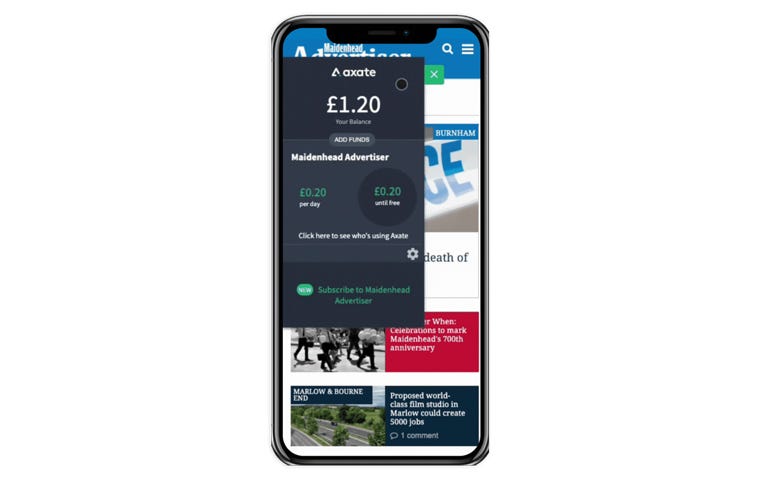
    Our contribution to improving the future is to create the tool which solves one of the internet’s central dysfunctions. It’s called Axate and you can try it right now on Reaction and dozens more sites if you haven’t already. Just glick the green tab in the top left of the screen and get started. An article will only cost you 30p and unlimited access for the week kicks in when you have spent £1.20.

    With initiatives like this we will create a better, richer, more diverse, more honest, more trustworthy internet for all of us. Especially for Britain, a creative champion.

    We have the creators and innovators who are already building this new world, and in Britain we are best placed to lead it.


    Originally published at https://www.axate.com on June 7, 2023.

  • When it became clear over a decade ago that advertising alone could not sustain the news industry, news publishers increasingly turned to subscriptions. Now we need to look beyond subscriptions to other reader revenue approaches which address the needs of more of the audience and a wider range of publications.

    In the noughties, I was in a strategy role at NewsCorp and had long been concerned about advertising’s dependability as a single digital revenue stream. The move to subscriptions, derided by some, was one I strongly supported, and we’ve seen many stand-out successes driven by subscription models.

    When I crunched the numbers, though, I had concerns. The marginal revenues of a subscriber were fantastic, but how many of our readers — especially the mass market readers of tabloid newspapers — would we persuade to subscribe?

    Our modelling suggested we might achieve a few hundred thousand digital subscribers, but it was hard to imagine converting the millions of buyers our mass-market titles were reaching at the time.

    Managing the plateau problem

    The plateau problem has proved to be the Achilles heel of subscriptions: At some point, subscriber growth slows and then stalls. For many news publications, this happens at around 2% or 3% of readership. Once there, things get tough. Replacing or retaining cancelling subscribers, especially in tough economic times for readers, takes expensive incentives which can depress ARPU over time.

    For many titles, subscription is a non-starter. Populist, mass-market brands addressing a broader and less affluent audience, for example, struggle to get formal commitment from their readers at any price.

    The time is right to look beyond subscriptions in the search for reader revenue. The 90%+ who aren’t subscribing are your opportunity, they’re the great untapped footfall walking past your product on the digital high street daily.

    Discount commitment, not prices

    Right now, the most common way to acquire subscribers is with price discounts. Deep discounts help keep subscriber numbers high, but conversion rates to high-value, long-term customers are tiny.

    How about discounting commitment instead?

    Most would-be customers are, just as in the days of print, casual readers. They like and even love your product and come back to it often. But they aren’t willing to commit to monthly payments. Paying casually — the equivalent of a cover price for a day’s access or even just for single articles — fits much better with their behaviour.

    You can test this assertion yourself. Are you ever frustrated by paywalls? Don’t want to subscribe, but do want to read things sometimes? What happens if someone shares an article with you, but you’re blocked from reading it? I have yet to meet anyone who, as a customer, would not welcome the option of casual payment for the digital publications they are locked out of.

    The lucrative nature of casual readers

    Enabling casual payment means you can transact with more of the crowd outside your paywall and start charging for products that are ill-suited to subscription.

    It also links the frequency of reading to revenue. Newsletters, notifications, and other nudges can bring occasional readers back more often, paying a small amount whenever they do.

    You can sell frequent visitors a full-priced subscription; it saves them money and locks in their commitment.

    Some of them will turn you down. Some people will choose the flexibility of casual purchase over the formality of a subscription, even if it costs them more. We’ve seen this at Axate. We’ve even emailed readers to point out that they could save money by subscribing, but they have opted to keep spending more money casually.

    Most people are never-subscribers. They only read a few articles a month, they’re already subscribing to something else, they are careful how they spend their money, or they just don’t like having many subscriptions. If their only option is to subscribe, they won’t be your customer. Letting them buy when it suits them makes much more sense for them and you.

    The potential of churned users

    With cancellations on the rise, retaining churning users is becoming more expensive and less effective.

    Most subscribers must like your product, so when they cancel is it your content or your business model they’re rejecting?

    Churned and churning users stand to become your easiest source of growth. Offering continued access on terms which suit them works better than locking them out. Some publishers have more churned subscribers, historically, than active ones. They represent a deep pool of opportunity.

    Reasons to be cheerful

    If you’re worried about subscriber numbers, I hope this article sparks your optimism. Thinking about paying customers instead of just subscribers opens huge new opportunities.

    For me, it has always been simple: If we think about customers and design a product and pricing model that works to deliver their needs better, we’ll end up with a lot more customers. The 98% who don’t transact right now offer some rich pickings.

    That’s not to say there’s anything wrong with subscription for those it suits, but it shouldn’t remain the only option because there are so many customers and publishers for whom it doesn’t work.

    This thinking led me to build Axate, which lets publishers offer any combination of casual payments, registrations, contributions, and subscriptions to suit their audiences and themselves.

    There are millions of untapped customers out there, lots them frustrated to be crowded just paywalls. If you can knock that wall down to size, more of them will come inside and start spending money.


    Originally published at https://www.inma.org on April 2, 2023.

  • It is great that the government is going to conduct a review into the travails of the press. They may well find that the issue is simpler than it first appears.

    The problem the press suffers from, put simply, is that it can’t make enough money. This isn’t, on the whole, because it is less relevant. More people read newspapers online than ever read them in print.

    The problem is that being more popular doesn’t make them more money. When this happens it’s a sign of a basic problem in a market. Generally speaking, being more popular — selling more — is the key to success in any business.

    So the challenge the press faces is how to convert their popularity into revenue. As long as they depend on advertising revenue this will continue to be a challenge and it will be a hard one for the government to intervene in.

    None of the interventions proposed to date, here or elsewhere, really do much to solve the problem either. Most of them amount to a proposal to force the big platforms to pay money to the newspapers, or variations on that theme. But the deeper you dive into these, and especially if you understand the complexities of copyright and compulsory licensing, the less attractive they look and the more obvious the risk of perverse outcomes becomes.

    The real answer to making news pay is to get customers to pay. The tragedy of the news industry is that such a simple and uncontroversial suggestion sounds, to many, like a mad fantasy.

    But put that aside and imagine for a moment that it became true, people were willing to pay for their news.

    What would they be willing to pay for? It would have to be something they really liked and valued. It would matter to most readers that they could trust it — fake news would hugely damaging to that. It would need to be habit forming and it would have to reflect their values.

    The newspaper market would start to resemble the one we used to know — diverse, competitive and heavily invested in content production.

    What would happen to their relationship with the platforms? Well, if every time someone came to read something, and the newspaper made money, they would probably take a very different view of how the platforms accessed and promoted their content. They might even want to encourage and invest in it because it would be a form of marketing.

    What would happen to the competitive landscape? If anyone who could launch a media product could make money from it in direct proportion to how popular it was, lots of people would try. Some would succeed. Investors would be attracted to a sector which was capable of generating significant returns.

    We would have a thriving market, in other words — not just for news, but for all kinds of media.

    But how could it happen? How can we ever persuade consumers to start paying for the content they love? Subscriptions put off all but the most avid fans whereas most media consumption is quite casual and uncommitted.

    The answer to that has just been launched. Try it for yourself, on Popbitch, and see. Set up a wallet, put a little bit of money into it. Soon you’ll be able to take that wallet and spend it on an increasing range of sites. Anyone who can attract you can charge you as low as 1p, or as high as they think they can persuade you to pay.

    Look at that and think again about whether or not consumers will pay for news. If the price is right, and it’s simple enough that becomes a question of how good you can make your product.

    Get it right and there’s a lot to play for.


    Originally published at https://www.axate.com in February 2018.

  • Paywalls are plagued by a paradox for publishers.

    On one hand, they offer the seductive prospect of secure, recurring revenue from a group of loyal users. On the other hand, they come at the price of reductions in traffic, users and therefore ad revenue.

    Introducing digital subscriptions is a big step, especially to products which were previously free. But the choppy seas of the online advertising market have left many news publications struggling to stay afloat.

    So, more and more, publishers are switching to paywalls. Confidence is boosted by knowing that the whole industry is moving to this model, and some publications have made a huge success of it.

    Done well, a new paywall is a very rewarding and encouraging thing. Seeing the numbers rising day after day is exciting. Extrapolating the growth sometimes leads to the thrilling prospect that initial targets might have been too pessimistic; they’re on-course to be smashed.

    However, for many publishers, those giddy early days are short lived. Sign-up rates slow, churn increases and early targets slowly retreat back into the distance. The business of creating and sustaining a growing subscriber base becomes a daily grind.

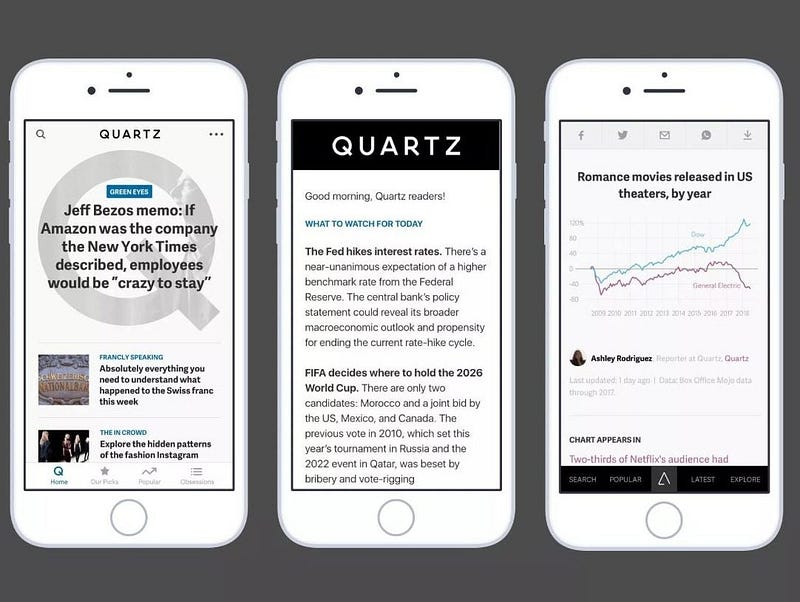
    Last week, Quartz threw in the towel, reverting back to a free content model after having spent a couple of years building up a — pretty respectable — 25,000 subscriber base.

    Explaining their decision, Quartz’s chief executive Zach Seward offered this telling comment: “Our members have clearly expressed that their number one motivation for paying for a membership is that they love Quartz and want to support the truly global and thoughtful business journalism that we do.”

    In other words, some of Quartz’s subscribers aren’t really subscribers at all. They’re not paying to get past the paywall and read a product they consider essential; they’re paying to help keep Quartz in business. Not so much subscribers as supporters, or patrons.

    Similar things can be seen in the statistics of publishers. For some, subscribers visit once or twice a month on average, and read one or two items when they do. There’s an alarmingly large cohort of “ghost” subscribers, who pay monthly and never visit at all. They’re clearly not paying for something essential to their daily, or even weekly, habits.

    This revelation is good news for Quartz, because it raises the prospect of having their subscriber (now re-cast as ‘membership’) revenue cake whilst also swallowing a high-traffic advertising income as a second helping of dessert.

    Similar things work elsewhere: The Guardian, and some others, have generated a meaningful and sustained income from voluntary payments.

    But what does it mean for paywalls, when subscribers aren’t really subscribers at all?

    The stark truth is that every paywall encounters slowing growth and, eventually, a ceiling on subscribers. For some that ceiling is high, millions of subscribers, and the future is bright. For too many others, like Quartz, it’s not high enough.

    Publishers have a cocktail of tricks to keep the numbers rising. Discounts, often over 90%, even up to 98% (or in one case, bizarrely, 100%!) proliferate. Special incentives, metered paywalls, memberships — they’re all aiming to shore-up their subscriber base and traffic.

    Perhaps, though, it’s time to ask whether subscriptions are the right model for the news industry at all.

    The market is saturated, yet 92% of the UK population don’t pay for a single digital news product. Nearly every would-be reader of nearly every publication will never subscribe. There are no successful paid digital news products addressing the mass market. As the cost-of living crisis bites, subscriptions are high on the savings list for many families, as the recent reduction in customers for Netflix shows.

    The simple truth is that asking people to pay too much for something they don’t really want doesn’t work. Relying on the charitable instincts of a small section of the audience is not a business model which an entire sector can rely on. Hoping people don’t notice they’re still paying for something they never use is not a long-term strategy.

    The news industry is running the risk that stagnation will turn into an accelerated collapse, as weakened foundations are further undermined by global economic stress.

    So, now is the moment for the industry to turn its optimistic sights in a different direction. We should start to ask what else we can do to persuade more of the audience — which is massive — to part with their money.

    Let’s start by dropping the demand that users continuously pay for something they only occasionally want to read. Let’s get rid of the concept of churn, and focus on frequency (and dormancy) instead. Which means, let’s focus on making the products, as they once were, unmissable.

    Newspapers used to cost a few pence every day, and sold millions of copies, every single day. We still have those millions of readers, what we badly need is to bring back those few pence. Spent every day, by millions of people, they add up.

    Perhaps we can find our future inspiration in some of the lessons from our glorious past.

    Dominic Young is a news industry strategist and commentator. He previously held a number of strategic and operational roles at Newscorp and has initiated and run a number of industry-level initatives and organisations. He is currently CEO of Axate, a company he founded to create a new network and better business models for media and its consumers.

    Email pged@pressgazette.co.uk to point out mistakes, provide story tips or send in a letter for publication on our “Letters Page” blog


    Originally published at https://pressgazette.co.uk on April 21, 2022.

  • Founder of micropayments platform Axate Dominic Young argues that chasing digital subscriptions could be futile for many publishers

    You know the story, of course. Poor old Sisyphus, doomed for eternity to push a great boulder up a hill, only for it to roll back down as he reached the top.

    For Sisyphus read 99% of news publishers — and the effort (equally futile) is to build a sustainable business on subscriptions.

    Press Gazette’s 100k club research made this abundantly clear.

    Only twenty-eight English language news sites in the world have managed to get over 100,000 subscribers. Twenty-one of them are in the USA. Three of them account for more than half the total number of subscribers.

    In other words, nearly everyone launching a subscription model now will be at the other end of that very long tail. The numbers have always been disheartening. Even successful subscription products only convert a small single-digit percentage of their audience to subscription. If the audience is 100m people that’s a pretty good business — but it’s a lot harder if you’re smaller.

    The recent rush to subscription has highlighted something else, though. Once a user is subscribing to one thing, it’s a lot harder to get them to add another subscription as well. As subscriptions grow overall, the available market gets smaller and smaller for anyone entering the fray.

    The same goes even for the big players. After the early rush of sign-ups, all subscription products hit a plateau. Persuading new people to join requires steeper and longer-lasting discounts, other expensive inducements. There comes a point when the real lifetime value of a new subscriber is dangerously close to nothing at all. Pushing that boulder for no result seems increasingly irrational.

    The rise of Substack highlights a similar trend. Although there are a significant number of stand-out successes on that platform, the long tail makes for much more meagre pickings for writers further down the, er, stack.

    The truth is, and people who know me will have heard this before, that subscription is a poor model for news media. It locks most people out, readers don’t like it and it can’t generate large enough revenues to sustain any but an exceptional few news organisations.

    The media needs to completely re-think its model and it needs to establish a new way of working which opens up both revenues and the market overall. It needs to take advantage of the extraordinarily broad network of readers it has collectively, and turn it into a marketplace.

    Interestingly, the rise of Substack has added new urgency and momentum. Publishers are thinking about how to create their own newsletter/microsite business. Their motivation is partly talent-retention, opening a new source of income for talent which might otherwise be tempted away by the open chequebook of new and well-funded platforms like Substack.

    It’s also motivated by the need for innovation, opening a completely new revenue line to supplement and expand their existing but slowing subscription income.

    [Read more: Substack: The newsletter platform that’s convinced Glenn Greenwald and other high-profile journalists to fly solo ]

    Existing publishers can create a formidably better offer both for their readers and their contributors. Keeping the concept of reader payment, but ditching the barrier of monthly subscription, and adding newsletters which offer content from across their main product and their new contributor microsites, they can drive significantly greater take-up and revenue, much more quickly. Having a single, sector-wide, payment mechanic takes away the friction and repeated sign-ups for users. Having empowered, motivated and invested contributors will drive new energy as well as revenue.

    While nearly everyone knows the punishment Sisyphus endured, very few people remember why. He was sentenced to a lifetime’s toil for cheating death not once but twice — the third time Zeus lost his rag. The publishing industry has only barely survived its delusion that advertising would provide a sustainable business model. Subscriptions are equally chimerical. Will Zeus be any more forgiving if the industry wilfully ignores the massive network that is its chance to thrive?

    Image Kaspars Grinvalds/Shutterstock

    Email pged@pressgazette.co.uk to point out mistakes, provide story tips or send in a letter for publication on our “Letters Page” blog


    Originally published at https://pressgazette.co.uk on July 14, 2021.

  • Google’s attention-grabbing announcement that it will spend $1bn over three years on licensing material from news publishers has been greeted by many with enthusiasm ( including Press Gazette).

    It’s easy to understand why: new sources of revenue for publishers have been thin on the ground for a very long time. Not only that, but Google’s refusal to pay news providers has been a long-standing bone of contention for a news industry which has seen its content exploited extensively as its revenues have continued to collapse.

    Google is positioning this as a business deal. Their new service, the Google News Showcase, will use content in a way which requires permission under copyright law. Such permission is not needed, they would argue, by their regular search and Google News services, but this product is new and different. So, just like any other responsible and law-abiding business, they’re acquiring the supplies they need for their new product: licences to use publishers’ content.

    As business deals go, though, it’s an unusual one. There seems to be no business rationale for Google at all. Google frequently says it doesn’t make money from news, and, I’m told, it is not planning to charge users for their Google News Showcase nor sell advertising within it. There appears to be no particular customer or competitive demand they are responding to with this new product, no business opportunity they have identified. They’ll also still be offering their unlicensed Google News product alongside the Showcase.

    So, what is Google actually buying? And what are publishers selling? And, more importantly: what sort of business invests $1bn in content for a product which addresses no commercial opportunity and will make no money?

    The news sector complains that they are the victims of the way Google operates, accusing them of taking too much from publishers, giving too little back and refusing to negotiate. This has contributed to the pressure Google and other platforms are now under from governments, regulators and the media — pressure which is now beginning to translate into new regulations in major markets, impacting on the ways Google gather and exploit content and user data.

    Google clearly needs to do all it can to relieve this pressure, because these new regulations threaten not just to undermine its news operations but could easily introduce restrictions or conditions on Google’s hitherto almost completely unfettered right to crawl, copy and exploit content on the web. This would put the core of its business at risk.

    Content from our partners

    Reducing or eliminating that threat is imperative for Google. Calling it a deal, not just a handout, answers the charge that Google won’t sit down and negotiate terms — something the Digital News Initiative, which hands out money as grants, doesn’t address.

    So, Google isn’t just buying content licences. What exactly are publishers giving it in return for their money?

    The simple deal sounds like the sort of syndication deal I used to do early in my career (as group syndication manager at News International). The publisher supplies a selection of stories, which Google includes in its News Showcase. It puts some publishers’ content in a different place, for readers to enjoy, just as my deals meant our content appeared in newspapers all over the world (but never newspapers competing with us for the same audience).

    The bigger part of what they’re giving Google is the unwritten part: a big PR coup, which might help them achieve their hugely important regulatory goals and remove a persistent thorn from their side. “Google pays for news” is a headline they badly need.

    For publishers, obviously, the revenue is much-needed. Are they getting anything else that’s valuable? Does this deliver a sustainable, long-term, new revenue stream for them? Does it engage people more deeply with their product and build audience loyalty? Does it make negotiated licences and payments the norm for online services? Does it encourage readers to spend money directly with publishers? What’s different and compelling about this compared to other aggregated news services like Google News?

    One of the best bits of negotiating advice I learned early in my career is always negotiate by understanding the value the other side puts on what’s being negotiated. You might be offering something which is incredibly cheap for you, but very valuable for the other side. Make sure you price according to the value to them, not the cost to you, otherwise you risk underpricing. Likewise they might be giving you something you value highly, but which costs them little.

    One of the strange things about companies like Google is that money is one of their most plentiful commodities. Their revenue and profit figures are so eye wateringly high that they have huge amounts of cash on hand. Cash is cheap for Google, and in desperately short supply for the publishers.

    My advice to publishers would be to remember the relative value of what’s being traded here. If you’re selling something which helps the other side mitigate a very real risk to their business, bear that in mind when considering the amount being offered in return. Friendly relations with the news industry are worth an immense amount to Google right now.

    To put it more colloquially: take whatever amount you would otherwise consider, and multiply it by ten.

    My other advice has always been to know your bottom line and don’t cross it. Be sure you actually want the deal. If you don’t get the deal you want, be willing to walk away.

    Any publisher negotiating with Google has to decide what it is they need — not just financially, but for the ongoing health of their business — for the deal to work for them. Anything short of a permanent and widespread re-set of the relationship, I would argue, will not deliver the long term impact they desperately need.

    Whatever their bottom line, if they can’t get it, they’ll be better off without the deal.

    Dominic Young is founder and chief executive of casual payment tool Axate and a former head of IP and strategy for News UK

    Email pged@pressgazette.co.uk to point out mistakes, provide story tips or send in a letter for publication on our “Letters Page” blog


    Originally published at https://pressgazette.co.uk on October 9, 2020.

  • It’s interesting that, just after Google announced that it’s going to start paying publishers, the New York Times said it is pulling out of Apple News.

    Those two events tell us a lot about the way ahead for journalism.

    Google’s plans seem vague. So far they said they want to “pay publishers for high-quality content for a new news experience launching later this year”. The fact that they have announced the licensing before the actual product tells us exactly where their priorities lie.

    The headline on their announcement confirms it: “A new licensing programme to support the news industry”.

    Supporting the news industry is nothing new for Google. Initiatives like Google News Initiative have been under way for years, and have given out hundreds of millions of dollars as grants.

    So why this different approach? The important word is “licensing”.

    This word means they are asking permission to use content in their services, not just going ahead and doing it. They are agreeing terms with publishers, including payment — they’re negotiating.

    This is pretty radical stuff for Google. When they have been asked to pay publishers before, they have aggressively refused, even going as far as to pull out of some markets rather than comply with new laws.

    Their position is, and has to be, that their core activities are completely legal, not subject to normal licensing rules. The things they do with the content they crawl they do mostly opaquely and automatically within their gigantic networks, with no right for anyone else to know exactly what happens to the content we own.

    Licensing is anathema to that way of working. Having to ask permission when they crawl and copy content, and waiting until it’s received, would collapse not just their news business but substantial parts of their entire operation. Hence the hostile response whenever anyone tries to force them.

    Until now, they have never offered publishers real visibility and control over how their content is used.

    If Google’s new aggregated news “experience” turns out to be a hit with readers it could be a headache for publishers, especially as more of them focus on reader revenue.

    To understand that headache, the NY Times decision to pull out of Apple News is informative.

    The decision, they say. is because they want to “control the presentation of our report, the relationships with our readers and the nature of our business rules”.

    When a publisher becomes a content provider for someone else’s service (or “experience”), they lose control over their product. Being a content provider is a perfectly good business — it’s why news and picture agencies exist.

    The business of turning content into products, though, is the job of the journalists and editors working for publishers.

    Newspapers, especially those with reader revenues, need to be consistent in delivering the readers’ expectations. They have to do this despite all of the content which makes up the newspaper changing constantly. The title, the editing, the style, the mix of content, all combine to create something consistent despite its ever changing make-up. It is the consistency of the product, distinct from the content, which leads readers to develop the habit which brings them back.

    Detached from the title, that content degrades back into raw materials, and its value to the publisher degrades with it. Added to someone else’s product it becomes more theirs than yours, and the value evaporates, as the painful experience of the news industry on the internet has taught us over decades.

    The internet, generally, puts an algorithm in the editor’s chair, drawing on huge amounts of content. and the reader is offered something which nobody other than them ever sees. Your title might be credited as the source, you might even get quite a lot of traffic (and a little bit of ad revenue), but the user’s relationship is fundamentally rooted elsewhere.

    The NYT has clearly concluded that, regardless of any income, or traffic, or visibility, they prefer to keep control over their product.

    When it comes to Google licensing content, the publishers should proceed with caution.

    Google say their primary goal is to support the news industry. That being the case, perhaps publishers should invite Google to support them in more straightforward ways, avoid becoming content providers for someone else’s product — even with its licences and fees — and keep control over their products, reader relationships and future revenues to themselves.

    Dominic Young is a former senior executive in the newspaper industry in the UK and USA. He founded his current company, axate.com, to create a publisher-centric casual payment network which enables reader revenue to become the primary revenue stream for more publishers.


    Originally published at https://pressgazette.co.uk on July 9, 2020.

  • In a recent CJR article, James Ball argued that so-called micropayments simply won’t work for journalism. I don’t disagree with him. Micropayments, as conceptualized traditionally, offer little benefit to readers or to publishers. They allow cherry-picking of the best content. They disaggregate the products into individual articles. They punish, rather than reward, readers who engage most deeply. They’re a hassle. Taken together, it’s not hard to conclude they won’t work.

    I will admit to a bias-I run a company, Axate, that seeks to make a version of this work. But where Ball goes wrong is to draw the conclusion that the only way is subscription. His argument ignores the established fact that subscriptions work only for a small minority of publications and a small minority of readers. There simply must be a way for the others.

    PREVIOUSLY: Why micropayments will never be a thing in journalism

    There are some facts we can all-I hope-agree on. The business models that digital journalism currently relies on are not working, and the recent COVID-19 crisis has brought that dysfunction into sharp relief. With advertising revenue suddenly ripped from underneath them, sites that give their content away for free have been left coping with a dramatic fall in income.

    For sites that already rely on subscriptions, on the other hand, numbers have by and large been better. But even in good times, acquiring new subscribers and retaining existing ones is an arduous, expensive business. It doesn’t work for everyone.

    So according to the Ball model, we leave the middle majority of readers, for whom payment is not an abhorrent idea, but who resist the commitment and ongoing expense of subscription, as a completely unmonetized group.

    I’ve worked in news for decades, and my thoughts turned to this conundrum over ten years ago when I was working for a large news publisher. We were contemplating subscription for all our products, and our modeling kept coming up against the same Gordian knot. While the marginal economics of subscription were, and are, compelling, the high value of each subscriber was hard to match with sufficient numbers of them to create a compelling business overall.

    For populist tabloid titles, used to selling millions of copies, it didn’t work at all. They’re all about volume; their relationship with their readers is casual, driven by habit, not commitment.

    It’s true that, looking around now, things seem bleak. Advertising continues to fail everyone. A small cluster of successful subscription newspapers now tower over everyone else, their long-term bet looking much better in hindsight, bolstered by being the leading brands of the pre-internet age.

    Very few in the industry dare imagine a thriving future, where revenues, paying customers, and profits are abundant and growing. Yet that’s the future I envisage.

    Ball did make one point with which I entirely agree:

    “Newspapers and magazines have been conceived as a package-a mix of the light and the heavy. Some stories cost far more to produce than others, but it balances out because you buy the whole thing.”

    This is an essential point. The internet taught us that it’s necessary to break our newspapers apart, turn them back into “content,” and allow it to be exploited and exposed out of context all over the internet. But that is simply wrong. Not only does it rob the newspaper of most of the economic benefit of its content, but it robs the reader of the opportunity to form a relationship with a product and brand that, despite all of its content changing every day, remains consistent and reliable.

    Paywalls do the same thing. Subscription sites lock people out and demand commitment. Subscription denies the sort of casual access people are used to on the free internet, not to mention in shops and at newsstands. Even registration is a barrier, and the majority of people turn away.

    So what’s the alternative? If every user could read, and pay for, any publication from any publisher, not only would we find it easier to attract and profit from them, but the news media would discover that, collectively, they already have access to one of the biggest networks of users in existence. Who doesn’t read the news? Add in other media sectors, and the network covers everyone.

    Some publications are worth two dollars, some twenty centsand they should be able to charge what they’re worth. But that’s just the start: every click, every registration, every form to fill in is a hassle. Payment needs to be as casual as browsing.

    If we can achieve that, the only thing left to fix is the product itself-the actual sites people visit. People have to like your product, want to come back, want to tell their friends. Investing in the product becomes easier knowing the return on that investment is in your own hands. If you’re setting the price, you can write the business plan.

    Payment does not need to be synonymous with subscription. We do not need to attach words like “micropayment” to other options. Casual payments, a better term, can be as small or as big as makes sense to the publisher; all they have to do is make sure their product is worth paying for.

    It has been obvious to me for some time that, however challenging it might be to get started, nothing can change until someone creates the essential building blocks of a publisher-centric network with casual payments at its core. That has been my mission.

    I just ask two things. First, that publishers experiment, not expire. Second, a simple plea. Don’t call them micropayments.

    Dominic Young held a number of senior management and strategy positions at newspapers in the UK and USA. He has also initiated, led, and run a number of industry bodies and initiatives. He founded his new company, Axate, to address the conundrum and opportunity discussed in this article. @dominicyoung


    Originally published at https://www.cjr.org on June 24, 2020.